


Every organization wants better leaders. That is why companies invest in workshops, coaching, and leadership programs. Yet the same coaching rarely works the same way for everyone. Everyone attends the same sessions, learns the same frameworks, and leaves with the same action plan, but months later, some leaders have grown while others haven’t changed at all.
The reason is simple: not everyone think, communicate, or respond to challenges in the same way. Some naturally prefer structure and planning. Others are more comfortable adapting as situations change. Some make decisions quickly, while others take time to gather information before acting. These differences shape how people lead, learn, and grow.
Why doesn't the same leadership training work for everyone?
Not every leader needs the same kind of support.
One leader might avoid difficult conversations. Another might rush into decisions without hearing the whole team. Someone else may be great with people but struggle to delegate.
If everyone gets the same advice, it rarely helps.
A personality assessment gives managers a better starting point. Instead of guessing what someone needs, they can coach based on how that person naturally works
What does a personality assessment reveal?
A personality assessment doesn’t tell you whether you’re good or bad at your job. Instead, it gives you a clearer picture of how you make decisions, respond to pressure, work with others, stay focused, and approach challenges.
It adds another piece of understanding. Instead of just relying on conversations and observations, you get real data behind a client’s strengths, where they need work, and how they naturally operate.
These insights help individuals, managers, HR teams, and coaches make better development decisions based on data rather than assumptions.
How does TTPI on Elemetrik support leadership development?
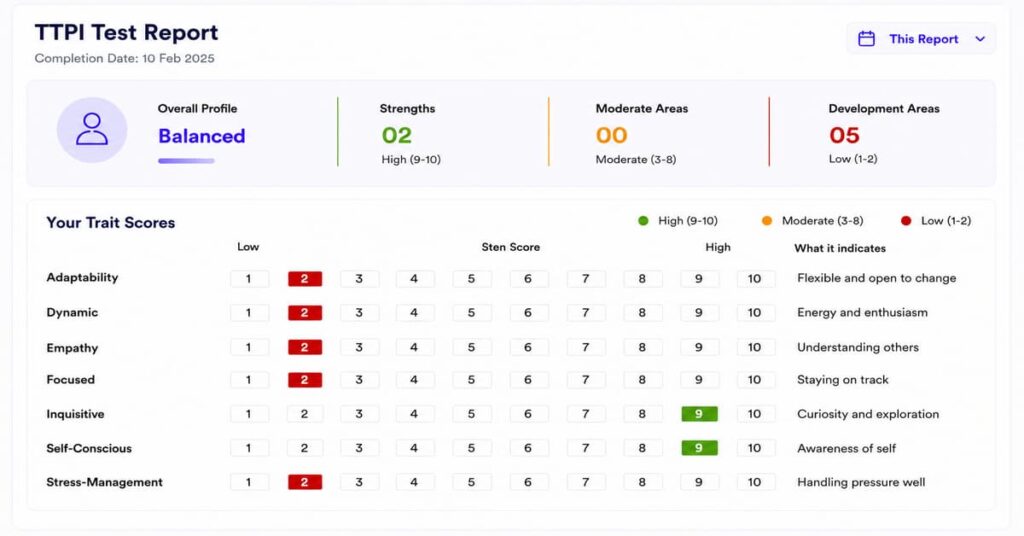
TTPI is a scientific, data-backed psychometric assessment built on the Big Five Personality Traits and validated for the Indian workforce. It measures 20 workplace personality traits and provides structured insights that support hiring, training, coaching, and leadership development.
Organizations can use TTPI as part of their hiring, coaching, and development initiatives to better understand workplace personality traits and support employee development.
TTPI is also available for consultants through Elemetrik, allowing them to access validated assessments, deliver reports under their own brand, and use them as part of their coaching and consulting services.
Through Elemetrik’s plug-and-play platform, organizations and consultants can deploy assessments without building their own assessment infrastructure. The platform follows a pay-per-use model, making it easy to get started and scale as needed.
Conclusion
There’s no single leadership approach that fits everyone.That is why giving the same advice to every person barely makes any changes.
A personality assessment gives you a real insight of how someone works, before you even start deciding how to help them grow. Managers, coaches, organizations all of them get a much better starting point for coaching, planning, and those bigger leadership conversations.
Turn personality insights into more targeted leadership development with TTPI
Explore TTPI on Elemetrik to bring greater clarity and confidence to your leadership development initiatives.
Frequently Asked Questions
What is a personality assessment for leadership development?
It helps organizations understand how leaders naturally communicate, make decisions, and work with others, making development more focused and effective.
Is personality assessment only useful for hiring?
No. It is widely used for hiring, coaching, leadership development, training, and employee development.
Does TTPI replace coaching?
No. TTPI supports coaching by providing structured insights that help managers and coaches have more meaningful development conversations.