

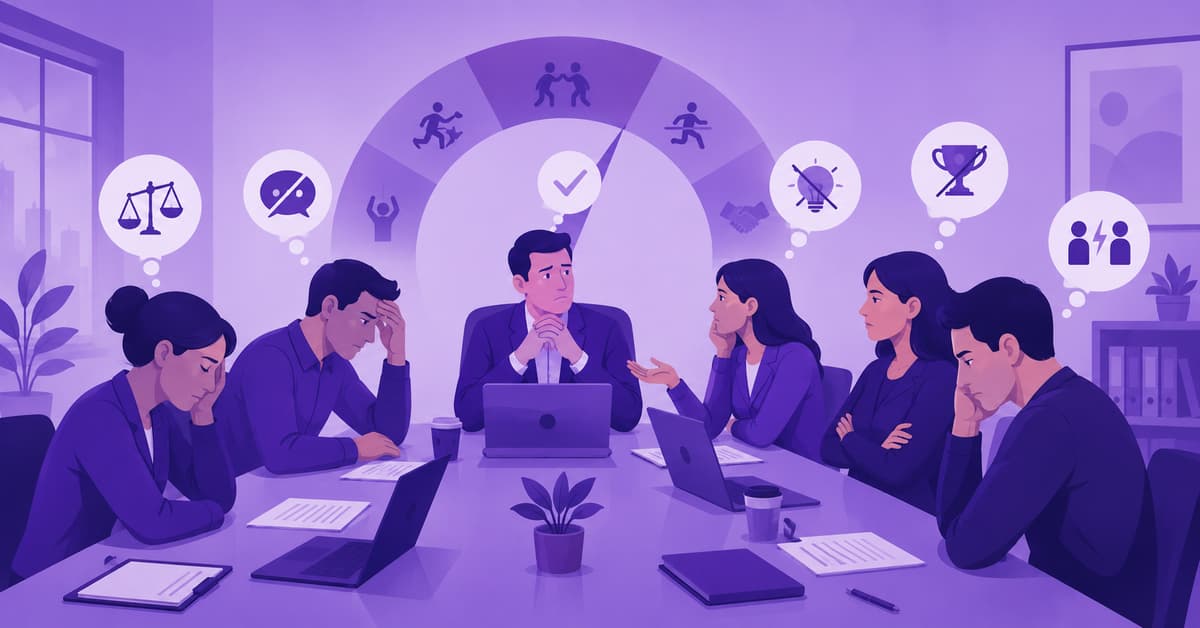
In a typical team meeting, everything looks perfect. Work is discussed, the agenda is set, and decisions finalised. Nobody opens up about their opinion, so it looks like everything went smoothly from the outside.
But there are certain things employees never discuss openly. Some might feel they alone carry more of the workload, while the rest of the team does half the work, yet everyone gets paid equally. Another employee might feel they never get credit or recognition despite all the hard work. And a third employee might have a difference of opinion about a decision that was made but nod along anyway because talking about it felt like trouble.
If you looked at the team from the outside, you wouldn’t think there was any problem. No arguments. No shouting. No heated meetings. Everyone seems polite. But that is exactly the problem.
Research says Out of 10 employees, only about 3 feel that their ideas and opinions are truly valued and considered by their company.
What Looks Like Harmony Is Conflict Avoidance
Mostly people assume that conflict means it’s usually arguments and loud disagreements, so when the team is quiet without any of it, it is assumed that everything is perfect. But researchers who study team behaviours say that a calm team doesn’t mean a happy and satisfied team. Happiness and satisfaction show up when people can be themselves. They have the freedom to disagree openly without fear of being punished or pushed out. Silence doesn’t always mean peace. Sometimes, it means people don’t feel safe enough to disagree.
People often react to disagreements in the same way they always have, without even thinking about it. Some people avoid talking about the issue and hope it settles on its own. Others simply agree with everyone to avoid arguments, even if they have a difference of opinion. Both look like cooperation on the surface, but underneath, frustration quietly builds. Over time, people stop contributing the way they once did.
People don’t intentionally suppress conflict. They usually respond the way they are used to, without stopping to think about it.
Conflict Style Is More Than One Label
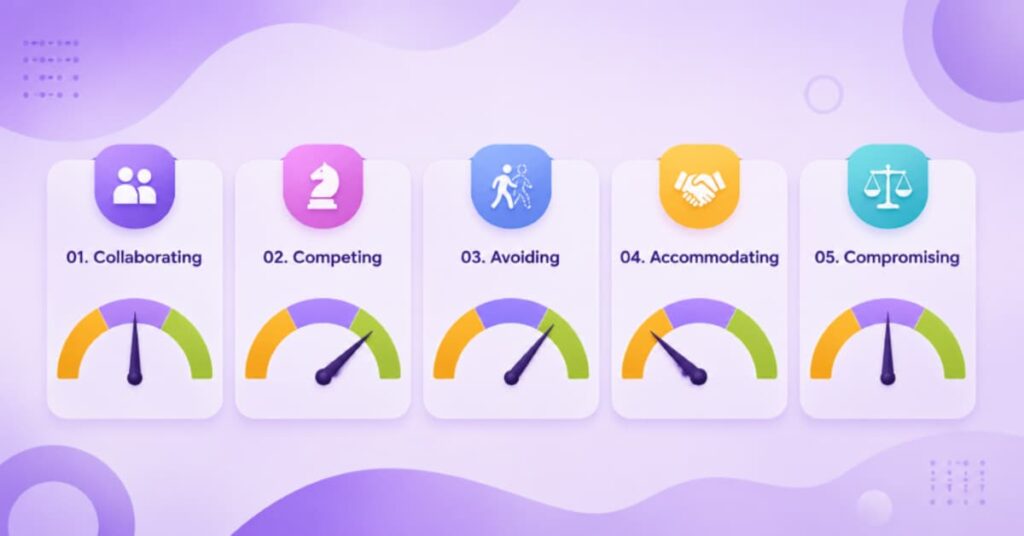
This is where naming the pattern helps. The Conflict Style Inventory looks at five ways people handle disagreement, based on the Thomas-Kilmann model: Collaborating, Competing, Avoiding, accommodating, and Compromising.
It does not put someone in a single box. Everyone carries all five to some degree, and the report shows where a person sits on each one, from low to active. Instead of labeling someone as “You’re an avoider” it shows that you naturally lean towards avoiding conflict, while collaborating isn’t your usual approach.
That distinction is important, because the report doesn’t just label. It asks questions that help them understand their own behavior and notice patterns they may not have realised before.
These reports will be useful in workshops or team session. People think that they know themselves and their patterns, they assume that they are easygoing or someone else like I dont avoid conflict. Seeing it as a gauge, not a guess, changes that. Someone may think they’re just being easy to work with, but they might be agreeing with others so often that their own needs and opinions never get heard. Seeing everyone’s results together shifts the focus from blaming individual person to understanding the team’s overall pattern.
Teams doesn’t have to eliminate disagreement. They need to stop mistaking silence for agreement, and that starts with people seeing their own default clearly.
Conclusion
Teams do not need to eliminate disagreement. They need to stop mistaking silence for agreement. That starts with people seeing their own default clearly, not guessing at it or assuming they already know. Once a team can name what is actually happening beneath the surface, the quiet stops being something to worry about and becomes something they can work with.
Explore how Conflict Style Inventory can bring these patterns into the open for your team.
Frequently Asked Questions
What is the Conflict Style Inventory based on? It is built on the Thomas-Kilmann Conflict Mode model, which looks at five ways people typically respond to disagreement: Collaborating, Competing, Avoiding, Accommodating, and Compromising.
Does it label someone as one type of person? No. The report does not put a person in a single box. It shows a gauge for each of the five styles, so you can see which ones a person leans on strongly and which ones they barely use.
Who is this useful for? Coaches, especially executive and leadership coaches, use it to give clients a concrete starting point for conversations about how they handle tension at work. It also works well in team workshops and leadership development programs.
How is it different from just asking someone how they handle conflict? Most people cannot describe their own pattern accurately, because avoiding or accommodating often feels like being easygoing, not like conflict at all. The gauges and reflection questions in the report surface patterns people would not name on their own.