

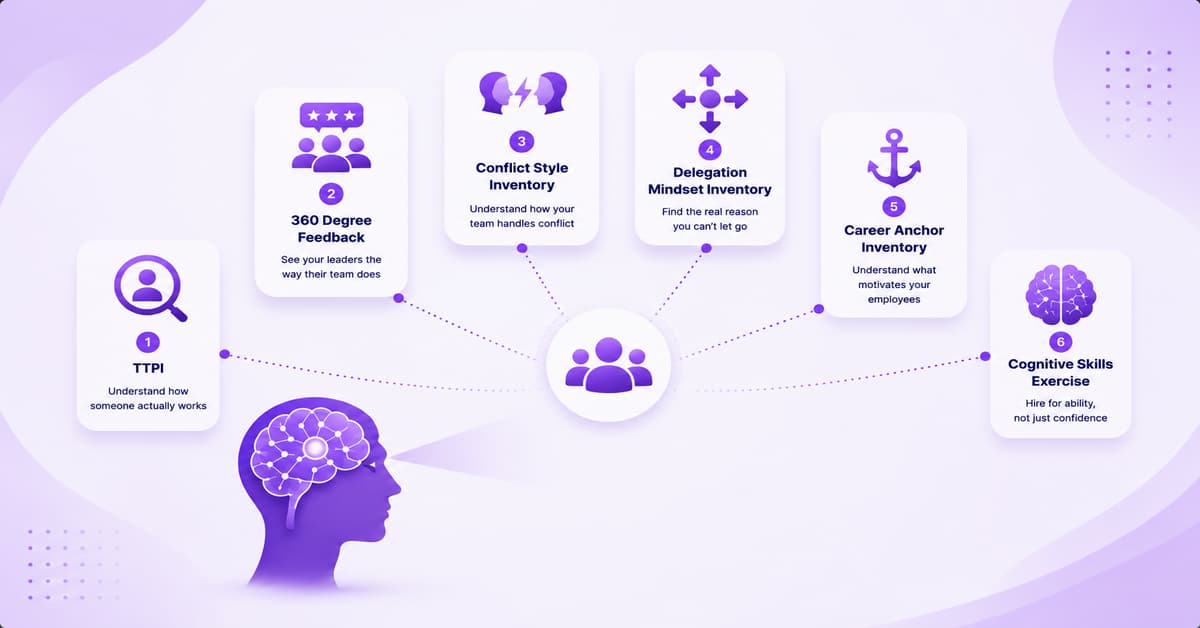
Every founder wants to hire the right people. But the real challenge starts after they join. A wrong hire costs more than money. It costs time, momentum, and the progress of the team and quality of work. Even with the right people, success depends on how well they work together, how managers lead them, how conflict is handled among team members, and whether employees see a future in the organisation. These are the decisions that shape a company’s growth.
This is where psychometric assessment tools become valuable. They provide data-driven insights that help founders make better people decisions across hiring, leadership, and team development.
TTPI: Understanding how someone actually works
A resume just shows their work experience, skills, etc. It does not tell you how a person handles pressure or what kind of management actually brings out the best in them. The Think Talent Personality Inventory (TTPI) helps founders understand workplace personality using the Big Five personality model. Instead of relying only on interviews, it provides insights into how people approach work, communicate with others, respond to feedback, and handle challenges.
As your company grows, TTPI also helps you understand the strengths and gaps within your team so you can build more balanced team.
360 Degree Feedback: Seeing your leaders the way their team does
Usually, a person gets promoted based on their performance, but they may not have the skills needed to manage a team, delegate work, give feedback, resolve conflicts, motivate employees, or support their team’s growth. They may be great at working individually but struggle when it comes to leading a team. A 360 Degree Feedback Survey collects structured feedback from the people who work closely with a leader, including managers, peers, direct reports, and other stakeholders. Instead of relying on one person’s opinion, leaders receive feedback from different perspectives.
For growing businesses, it helps managers build better leadership skills before small leadership issues become bigger team problems.
Conflict Style Inventory: Understand How Your Team Handles Conflict
Not every workplace conflict involves arguments. Sometimes conflict happens in silence. Someone might agree to the agenda in team meetings but not be happy with it, another employee agrees just to avoid difficult conversations. Each person responds to conflict differently.
The Conflict Style Inventory helps individuals understand their natural approach to workplace disagreements using the Thomas-Kilmann model. It measures five conflict styles:
- Collaborating
- Competing
- Avoiding
- Accommodating
- Compromising
The assessment does not put someone in a single box. Instead, it shows how strongly they lean into each style.
Once a team understands these patterns, Instead of thinking “why is this person so difficult?” it becomes “here’s how they handle disagreement, and here’s how I do it differently.” That shift alone tends to make team conversations far more productive, especially in workshops or coaching sessions.
Delegation Mindset Inventory: Finding the real reason you can't let go
Delegation is one of the biggest challenges founders face, most of the work will be done by themselves because they think it’s faster and easier.
But that will affect the business progress if everything depends on just one person. The Delegation Mindset Inventory helps founders and managers understand the beliefs that influence how they delegate work. Some people hesitate because they don’t fully trust others or see asking for help as a weakness, and some fear losing control. The assessment helps people recognise these patterns so they can develop healthier delegation habits.
As managers become more comfortable trusting their teams, employees take greater ownership, decisions happen faster, and founders gain more time to focus on growing the business.
Career Anchor Inventory: Understand What Motivates Your Employees
Why does an employee, despite being the best, leave a company?
Sometimes it is not because of salary. Mostly, people leave when the role no longer matches what matters most to them. Some employees might want to start something of their own, some may want to have a work-life balance, some may want to work in large organisations, and some want to grow into leadership roles.
The Career Anchor Inventory helps employees identify the career values and motivations that influence their decisions.
Understanding these motivations helps managers and founders make better hiring decision. Also, they can create development plans that align with what employees actually want from their careers in the existing team.
This leads to stronger engagement, better retention, and more meaningful growth opportunities.
Cognitive Skills Exercise: Hire for Ability, Not Just Confidence
Hiring decisions should not depend only on how well someone answers interview questions. Some of the roles require people to think critically, analyse information, solve problems, and learn quickly. Those abilities are not always visible in a resume or one-hour interview.
The Cognitive Skills Exercise measures analytical reasoning, numerical reasoning, and English language skills through structured assessments. It gives founders or HR another layer of information when they are comparing multiple candidates, its helps them make better hiring decisions.
It’s particularly valuable for roles where decision-making, learning ability, and problem-solving directly affect performance.
Conclusion
You don’t need every tool on day one Many founders think that they need a full HR system from day one. That’s not true. Start with whatever’s actually costing you right now. If hiring keeps going wrong, start with TTPI and Cognitive Skills Exercises. If new managers are struggling, bring in 360 degree Feedback. If disagreements are quietly draining the team, use the Conflict Style Inventory. If leadership can’t seem to let go of work, the Delegation Mindset Inventory is the place to look. If the best employee keeps leaving without warning, the Career Anchor Inventory usually explains why.
The right assessment depends on the challenge you’re trying to solve. Book a personalized demo to discover which Elemetrik solution is right for your team.
Frequently Asked Questions
Which assessment should founders use first?
It depends on your biggest challenge. If you’re hiring, TTPI and the Cognitive Skills Exercise are a good place to start. If leadership development is your priority, consider 360 Degree Feedback or the Delegation Mindset Inventory.
Are these assessments only for large companies?
No. Small and growing businesses can benefit well. In fact, making better people decisions early can prevent costly hiring and leadership mistakes as the business grows.
Can these assessments be used together?
Yes. Each assessment answers a different business question. Many organisations use multiple assessments across hiring, leadership development, coaching, and team effectiveness.
Do these assessments replace interviews or manager judgment?
No. They are designed to support decision-making, not replace it. They provide structured insights that help founders and managers make more informed decisions.